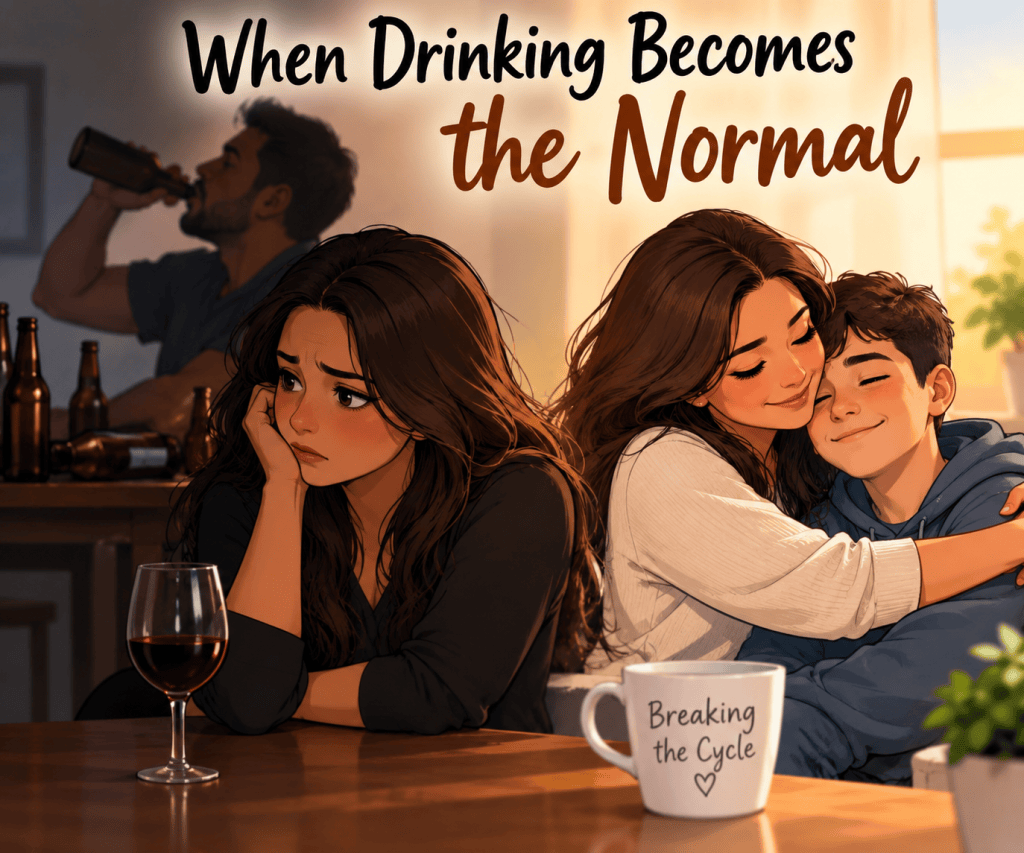
Living with an alcoholic is very challenging. When you are young, you don’t necessarily think that someone who drinks all the time will eventually become an alcoholic. Sometimes it starts slowly, and before you realize it, drinking has become part of everyday life.
My first husband started drinking occasionally, and eventually it became a habit. He would want me to drink with him, and if I didn’t, he would say that was why he went drinking with his friends. Looking back, I know that was just an excuse.
For a while, I fell into that trap. I started drinking with him. I was in my 20s, and I didn’t really think about where that lifestyle could lead.
Then one night, I got so drunk that I barely knew what I was doing. Luckily, my mother was there and helped me get to bed. After that night, I knew I couldn’t continue doing this just because someone else wanted me to drink.
Through the years, I tried to support my husband in stopping. We went to AA meetings, and I went to Al-Anon. For a while, AA worked for him. Things got better, and I hoped the change would last. Unfortunately, he eventually went back to drinking and returned to the same patterns.
Living with an alcoholic also means worrying.
You worry when they leave after drinking. You worry about them getting behind the wheel. You wonder if they’re going to make it home safely or if they could hurt themselves or someone else. That fear becomes another part of living with alcoholism.
Going out wasn’t enjoyable anymore either. Every time we went somewhere, he would get drunk. We couldn’t simply go out and enjoy ourselves without alcohol becoming part of it.
I was embarrassed and tired of always having a drunk husband. I was embarrassed by the way he looked when he was drunk and by the way he acted. It reached a point where instead of enjoying where we were or who we were with, I was paying attention to how much he was drinking and wondering what was going to happen next.
Those experiences changed the way I looked at drinking.
When I had my son, I made a promise to myself that he would not grow up seeing me drinking or drunk. I can now say I accomplished that.
My son is 16, and he doesn’t have childhood memories of seeing his mother drinking or coming home drunk. That was very important to me.
Now that he is older, I will occasionally have a drink around him. I can have a drink one day and go months without another one. I want him to understand that there is a difference between having an occasional drink and allowing alcohol to control your life.
Growing up in a Hispanic family, I often saw children being asked to grab an adult a beer from the refrigerator. I decided I wasn’t going to allow my son to do that. I never let him bring a beer to me or anyone else.
Some people may criticize me for that, and I’m okay with it.
I didn’t want him growing up thinking that bringing adults alcohol was just a normal responsibility for a child. After everything I had experienced, it was something I felt strongly about.
I also have family members who struggle with alcohol, and I’ve learned that alcoholism doesn’t always look the same.
One person is a calm alcoholic. He doesn’t become loud or aggressive, but I can see his health deteriorating. He is a businessman, yet drinking affects his ability to really run his business because he is drinking so often.
Another person is completely different. When he drinks, he gets upset, loses his filter and says hurtful things to the people around him.
Two completely different personalities, but the alcohol affects both of their lives and the people who care about them.
That’s something I don’t think we talk about enough.
Alcoholism doesn’t only affect the person holding the drink. It affects the people who love them. It affects marriages, relationships and family gatherings. It creates worry, disappointment, embarrassment and fear. Sometimes you’re constantly wondering what version of that person you’re going to get.
I couldn’t control my first husband’s drinking. I couldn’t make him stop simply because I wanted him to. But I could control the choices I made for myself and, later, for my son.
I couldn’t change what I experienced in my 20s, but when I became a mother, I could make sure some of those patterns didn’t become my son’s normal.
And I did.
“You can’t control someone else’s addiction, but you can choose which patterns you carry forward.”


Leave a comment